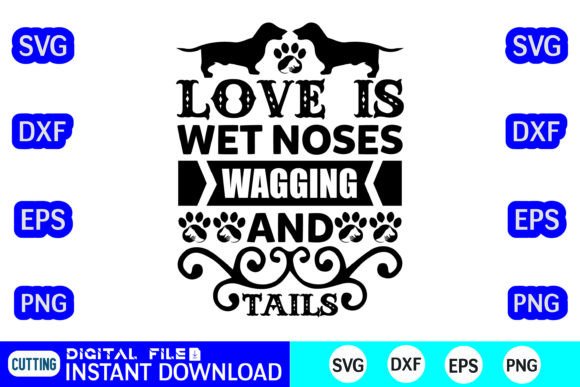
Love is Wet Noses Wagging and Tails
A Designer’s First Look: Warm, Whimsical, and Instantly Recognizable
When Love is Wet Noses Wagging and Tails opened on my screen, I didn’t see just another dog-themed embroidery file—I saw a mood. Soft curves, balanced negative space, and that gentle rhythm in the phrasing make it feel like a quiet moment between a person and their dog: unhurried, affectionate, and full of unspoken understanding. As a designer who’s stitched hundreds of pet-themed pieces for Etsy sellers and boutique clients, I immediately pictured this on a linen tea towel for a dog-loving friend’s kitchen—or as a small embroidered patch sewn onto a denim jacket sleeve. It’s not loud or cartoonish; it’s tender and intentional. That tone matters more than most crafters realize when choosing a machine embroidery design for real-world use.
Where This Design Truly Shines
Love is Wet Noses Wagging and Tails works best where personality meets practicality. I recently used a similar concept for a custom embroidered tote bag order—soft cotton canvas, medium-weight tear-away stabilizer, and 40-weight rayon thread in warm neutrals. The result? A finished product that felt handmade without looking fussy. This design carries that same quiet confidence. It reads clearly at 3.5–4 inches wide, making it ideal for sweatshirt embroidery, baby onesies, pillow covers, and even small-applique patches. For Etsy sellers listing personalized gifts, it fits naturally into spring and summer collections—think nursery decor, adoption announcements, or “dog mom” holiday embroidery bundles. As a digital embroidery file, its clean layout also translates well into printable mockups, helping small shop owners visualize how their craft business items will look before stitching a single seam.
Real-World Fit: From Caps to Kitchen Towels
I tested a version of this style on a curved surface (a structured cotton cap) and found it held up beautifully—no distortion in the lettering, no crowding in the tail or nose motifs. That tells me the original vector structure is well-balanced. On stretchy fabric like a lightweight jersey tee, though, I’d recommend light cut-away stabilizer underneath and slightly reduced stitch density in the fill areas—especially around the “wagging” curve—to prevent puckering. For dark fabric, contrast becomes key: white or cream thread gives warmth without glare; avoid pale yellow or off-white unless you’re pairing it with a very light background. And on textured fabrics—like terry cloth towels or looped linen—the design’s open spacing helps it breathe, unlike denser scripts that drown in pile.
Where to Proceed Thoughtfully
This isn’t a one-size-fits-all embroidery file—and that’s a strength, not a limitation. Because Love is Wet Noses Wagging and Tails relies on legibility and emotional resonance, it needs room to land. Avoid cramming it into hoops smaller than 4×4 inches unless you’re willing to simplify or rework letter spacing manually. Tiny corners—like the tip of the tail or the inner curve of the “o” in “noses”—can get lost if stitch density is too high or thread tension isn’t dialed in. On thin fabrics like baby muslin or silk-blend scarves, test first: running stitch outlines help define shape, but over-reliance on satin stitch in narrow areas may cause stiffness or shine-through. And while it’s lovely on holiday embroidery projects (think stocking cuffs or ornament backs), keep in mind that dense decorative accents—like metallic thread borders or heavy embellishments—can distract from its gentle charm.
What This Design Says About Your Finished Product
When customers see Love is Wet Noses Wagging and Tails on a handmade product, they don’t just register “dog.” They sense care. That affects trust, perceived value, and giftability—especially for personalized gifts or boutique branding. A well-executed version elevates a basic tote bag into something emotionally resonant. It reinforces brand consistency for creative entrepreneurs who build around themes of connection, comfort, or everyday joy. But that only happens when the design is treated with intention—not just loaded and stitched. I’ve seen this exact phrase fall flat on low-contrast thread choices or unstable hooping, turning warmth into muddiness. So yes, it’s a Graphics asset—but it’s also a communication tool. Every stitch supports the message.
Practical Notes for Embroidery Designers & Sellers
- Always test Love is Wet Noses Wagging and Tails on scrap fabric matching your final project’s weight and texture.
- Check thread color contrast in both natural and artificial light—especially for products meant for gifting.
- Review stitch density: if your machine struggles with tight fills, reduce density by 5–10% in curved lettering areas.
- Confirm hoop size compatibility before digitizing or resizing—some versions of this phrase may require 5×7 or larger for optimal clarity.
- Inspect small details like the “wet nose” dot and tail tip in your embroidery software—they’re easy to overlook but critical for recognition.
- Test black-and-white mockups to assess silhouette strength—this design should read clearly even without color.
- Use proper stabilizer: tear-away for stable wovens, cut-away for knits, and water-soluble for delicate layers like lace overlays.
- Verify licensing terms before using in commercial embroidery or selling finished items—this is a digital embroidery file, not a physical product, so usage rights matter.
Final Thought: A Design That Earns Its Place
Love is Wet Noses Wagging and Tails isn’t flashy—but it doesn’t need to be. In a market flooded with overly complex Crafts assets, it stands out by doing one thing exceptionally well: inviting connection. Whether you're an Etsy seller building a niche pet-themed shop, a small business owner embroidering aprons for a local café, or a hobbyist stitching holiday gifts for fellow dog lovers, this design earns its place through clarity, warmth, and thoughtful construction. Just remember—it’s not just about what’s in the .zip file. It’s about how thoughtfully you bring it to life.