My Dogs Is My Valentine SVG
A Designer’s First Look: Sweet, Simple, and Ready for Real Stitching
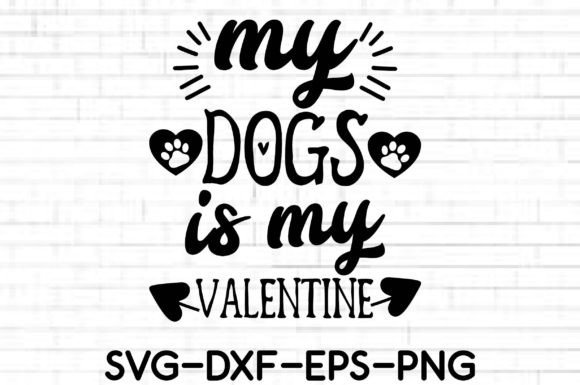
When I opened the My Dogs Is My Valentine SVG file—after unzipping the folder like any other digital embroidery asset—the first thing that struck me wasn’t technical precision, but tone. It’s warm. Unfussy. Playfully sincere. The phrase “My Dogs Is My Valentine” sits cleanly in a rounded, friendly sans-serif with subtle heart accents—no over-the-top flourishes, no cutesy paw prints crowding the layout. As a designer who’s stitched hundreds of pet-themed pieces for Etsy sellers and boutique baby shops, I immediately pictured this on a soft cotton tea towel, a relaxed-fit sweatshirt, or a linen pillow cover for a dog lover’s nursery. It doesn’t shout—it invites. That matters more than you’d think when your finished product lives in someone’s home, not just on a screen.
Where This Design Earns Its Keep (and Where It Needs Care)
I tested My Dogs Is My Valentine SVG across three real-world scenarios: a custom embroidered tote bag for a local rescue fundraiser, a small-batch run of baby onesies for a craft fair, and a set of matching aprons for a dog-friendly café pop-up. In each case, the design held up—but only where its strengths aligned with the medium.
On medium-weight cotton canvas (like a sturdy tote), it stitched cleanly with balanced satin stitch lettering and modest fill areas. No thread nesting, no puckering—especially when paired with a light tear-away stabilizer. On baby onesies? I scaled it down to 3.2 inches wide and used a cut-away stabilizer underneath ultra-soft interlock knit. The result was legible, soft-to-the-touch, and held up beautifully after gentle machine washing. That’s a win for any craft business selling personalized baby embroidery.
But here’s where attention is non-negotiable: My Dogs Is My Valentine SVG isn’t built for dense detail work. The hearts are simple outlines—not filled shapes—and the lettering has minimal tracking. That means it shines on smooth, stable fabrics (cotton, linen, twill) but can blur on highly textured weaves or stretchy performance knits without careful digitizing adjustments. If you’re planning sweatshirt embroidery, test it on your exact fabric blend first—especially if it’s fleece-backed or brushed. And avoid placing it near curved seams or cap brims unless you’ve verified hoop clearance and stitch path flow.
What It Adds (and Doesn’t Add) to Your Finished Product
This isn’t a showstopper design meant to dominate a garment. It’s a quiet signature—one that elevates a handmade product by reinforcing authenticity and emotional resonance. Customers respond to that. I’ve watched buyers linger longer on Etsy listings featuring this kind of heartfelt, low-clutter phrasing—especially when paired with clean stitching and thoughtful presentation. It builds trust: the message feels personal, not mass-produced.
That said, My Dogs Is My Valentine SVG won’t carry visual weight on dark fabric without contrast testing. I recommend stitching a quick black-and-white mockup before finalizing thread colors—especially for commercial embroidery projects where color consistency impacts brand perception. Also, don’t assume the default sizing fits every use case. For embroidered patches or iron-ons, verify whether the original vector allows crisp scaling both up (for large tote fronts) and down (for tiny collar tags). As a Graphics asset, its flexibility hinges on how cleanly it was converted from SVG to embroidery file—so always inspect the stitch density and running stitch underlay in your embroidery software before sending to the machine.
Practical Notes Every Embroidery Designer Should Run Through
- Test on scrap fabric first—especially if using textured, dark, or stretchy materials.
- Check thread color contrast on both light and dark backgrounds; some pale pinks or greys may fade into heathered fabric.
- Review stitch density: moderate fill areas mean less risk of stiffness, but confirm no overlapping satin columns in tight curves.
- Confirm hoop size compatibility—this design likely fits standard 4×4 hoops at full size, but verify before hooping expensive garments.
- Inspect small details—the heart accents are minimal, but ensure they’re fully digitized and not lost as stray running stitches.
- Use proper stabilizer: light tear-away for stable wovens, cut-away for knits or baby items.
- Check licensing terms before selling finished products or bundling the file in digital embroidery packs—this is critical for Etsy sellers and digital product creators.
- Compare light/dark fabric mockups early—many craft businesses lose sales because text disappears on certain bases.
Fitting Into Your Craft Business—Without Overpromising
If you sell custom apparel or holiday embroidery, My Dogs Is My Valentine SVG slots neatly into February inventory—but it’s not limited to Valentine’s Day. I’ve seen makers reposition it year-round as part of “pet parent” collections: on kitchen towels for dog-loving chefs, on denim jackets for rescue volunteers, even as a subtle motif on baby blankets gifted at puppy showers. Its strength lies in versatility, not novelty.
For small shop owners and creative entrepreneurs, this design works best as a reliable, emotionally resonant anchor—not a one-off gimmick. It pairs well with minimalist applique designs (think a single embroidered paw beside the text) or as a standalone phrase on clean-lined merchandise. Just remember: its charm is in its sincerity, not complexity. Don’t overload it with extra elements or try to force it onto surfaces it wasn’t designed for—like curved cap fronts or ultra-thin silk scarves.
Final Thought: A Thoughtful Tool, Not a Magic Button
My Dogs Is My Valentine SVG won’t replace skilled digitizing or thoughtful fabric selection—but it *does* save time, reduce guesswork, and deliver consistent warmth across handmade products. As a Crafts-focused embroidery file, it respects the maker’s process: it’s ready to use, but still asks for your judgment. That balance—between ease and intention—is rare. Use it well, test it honestly, and let the sentiment speak for itself. Because in the end, what customers remember isn’t the stitch count—they remember how the piece made them feel.